
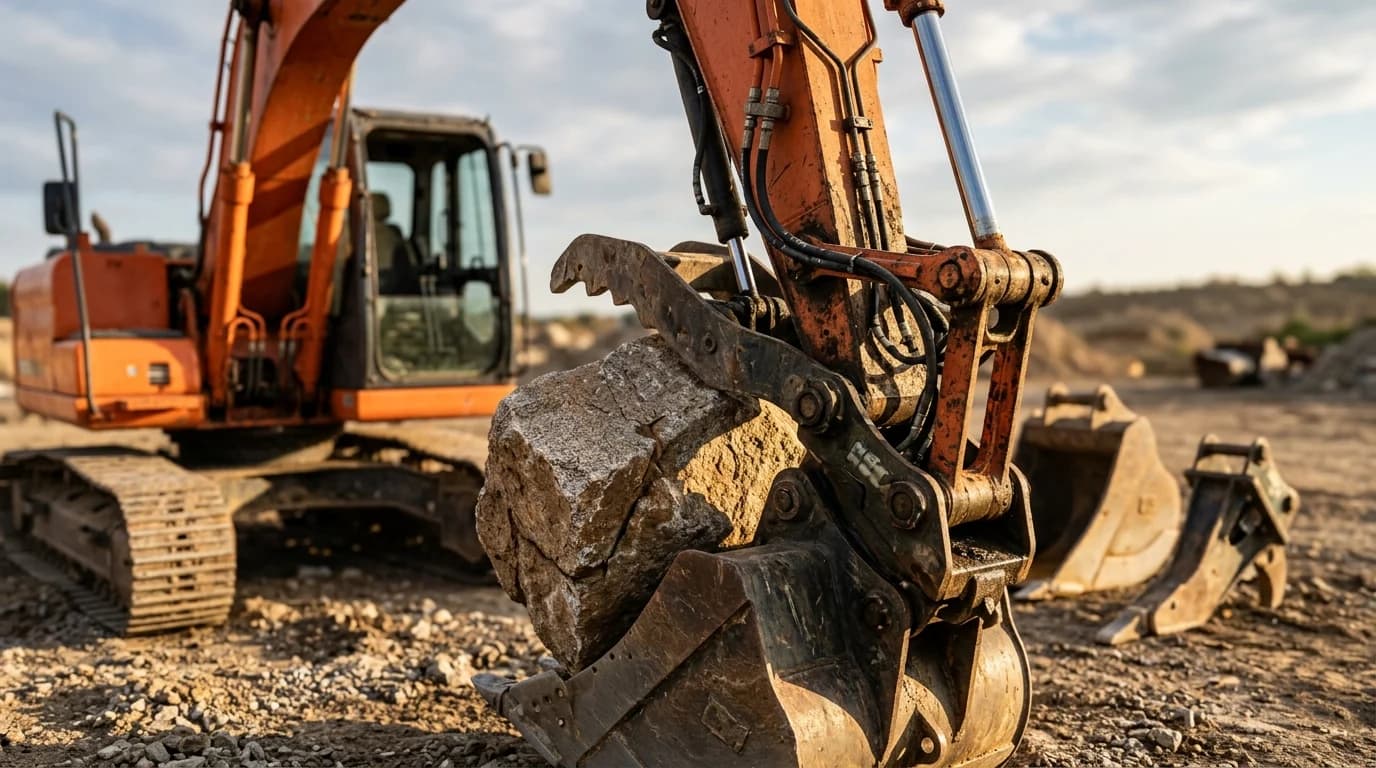
Excavator Attachments, Couplers, and Hydraulics
Why can two machines with identical dig specs differ by thousands? Learn how quick couplers, auxiliary hydraulics, thumbs, buckets, and carrier sizing matter.
Why Attachments Change Which Machine to Buy
An excavator is a hydraulic power platform. The same 20-ton machine digs with a bucket, breaks rock with a hammer, sorts demolition with a grapple, and compacts trench bedding with a plate, but only if it has the plumbing and coupler to run them. Two listings with identical dig specs can differ by thousands of dollars in real value, depending on what's fitted.
What to Look for in a Listing
- Quick coupler. A manual or hydraulic pin-grabber coupler lets you swap buckets in minutes instead of spending an hour hammering pins. Hydraulic couplers add convenience and cost. Verify the coupler's certification, because dropped-bucket incidents drove safety rules on older wedge couplers.
- Auxiliary hydraulic circuits. A single-acting circuit runs a hammer. A double-acting ("combined function") circuit runs thumbs, grapples, and tilting attachments. Retrofitting auxiliary plumbing on a used full-size machine runs $3,000 to $10,000.
- Hydraulic thumb. A thumb is hugely valuable for land clearing, demolition, and rock placement. A factory thumb-ready stick (bosses welded on) matters even if no thumb is fitted.
- Included buckets. A dig bucket plus a wide grading or ditching bucket is the useful minimum. Missing buckets on auction machines are a common hidden cost, from $1,000 to $8,000 depending on class.
- Blade on minis and midis. A backfill/stabilizer blade is standard on most minis and adds real utility. If a mini doesn't have one, that's unusual and worth questioning.
Sizing Attachments
Hammers, shears, and mulchers are rated for carrier weight ranges. A hammer for a 20-ton carrier can't go on a midi, and running an undersized carrier shakes the machine apart (and voids component warranties). If your job list includes breaking, sizing the carrier to the required hammer often decides the weight class before dig depth does.
General guidance to help you shop — figures are typical ranges, not a valuation. Confirm the specifics of any machine with the seller before you buy.